Eva Gata was born in Lviv. She is currently an associate professor at the Department of Applied Mathematics of Ivan Franko National University of Lviv. Her life calling is to teach students and write books. For the past three years, she has been actively collaborating with the University of Athens and the University of Thessaloniki (Greece), writing philosophical-mystical novels that, in her opinion, will make the world a better place.
Where does such a pseudonym – Eva Gata – come from?
Eva was the first woman, while “gata” is Greek for “cat”. In the book “Purification, or I Do What I Want”, one of the novellas bears the Greek title “Kano o ti thelo”, meaning “I do what I want”. This does not, of course, mean wanting something and then smashing someone’s windows! Do what you ought to do, but remain free rather than simply obeying orders. A cat walks wherever it wants, while a person goes wherever they can realise themselves most fully and with inspiration.
– Ms Eva, creative people often have several professions, usually to earn their daily bread, and this can deepen their creative work. How is it for you?
– I have two professions, and they probably became the soil from which everything else has grown. First, I am a wife and the mother of two sons; second, I am an associate professor in the Department of Applied Mathematics at Ivan Franko National University of Lviv. I have been fortunate: thanks to an agreement among three universities — Ivan Franko National University of Lviv, the National and Kapodistrian University of Athens, and Aristotle University of Thessaloniki — I have the honour of conducting research with Greek scholars and teaching computer graphics. I found wonderful partners, and we wrote a textbook together. In light of the Bologna Process, it has been an exceptionally interesting experience: it turned out that we taught essentially the same courses at different universities. I conduct research and write articles, and my body of work includes many textbooks of my own. As for writing fiction, I no longer know whether it can be considered a hobby, or which pursuit comes first and which second.
– How did your creative work begin?
– At some point, I realised that I am truly a happy person; it just happened that way. Everyone told me: 'You are lucky, everything is going well in your life.' I think it wasn’t some given fact; I probably cultivated it within myself. Perhaps we are happy not because happiness falls from the sky, but because we create it. We create our own life.
I have always been interested in philosophy, reading various thinkers in search of answers. At some point, I thought: no wonder they wrote wise things, I need to apply them in my own life. Since I am a mathematician and enjoy solving different problems, I decided to experiment with those ideas: what will happen if I do this or that... I began to analyse (the main thing being not to blame anyone): if there are certain troubles in my life, and I use specific conclusions, then I will get a certain result. If I change myself – my life will change. And suddenly surprises start to appear, because I stop complaining and start accepting the world as it is. I had bad relationships with various people, and I changed them to good ones. Greece suddenly 'fell from the sky' like a gift of fate, I was invited there. People strive for a position for years, and I got an interesting job without any favouritism. And what writer can boast of having drunk water from the Castalian Spring? I did it. It became clear to me: if I am capable of desiring something intensely and know how to set a goal – I will achieve it.
I often wondered: what will I leave to people? What I taught my students? The students will decide whether it was good or bad; at the very least, I try to put my heart into it... And what else can I do? Write a book and share how I made my life a happy one. One person will read it and put it into practice, then another, then a third... And they will thank me. And what if there are fifty readers, or a thousand... To be honest, my husband was afraid. He told me: “Well, you’ll publish it. But you have no idea how everyone will attack you.” Yet no one attacked me. On the contrary, the response was positive.
– Why would anyone attack you?
– Because I am not a philologist, not a professional writer. And indeed, my whole life I was only interested in applied mathematics. Writing textbooks taught me to express thoughts clearly and concisely, but literary works are a celestial sphere. I tried, I wrote, and they told me it turned out well. I myself did not expect it. And readers, moreover, claim that what I have written helps them live. I began to be invited, asked about this or that “difficulty of existence.” People who perhaps were not in very good relations with me, after reading my books became friends, got to know and accepted me through my book.
In Athens, I write wonderfully; I shut myself away there and create in solitude. Once, writers, striving for creativity, would go somewhere to a village or an island. So I wrote my fifth novel in Greece.
– The famous composer Levko Kolodub once told me that there are two incredibly disenfranchised "castes" in Ukraine – composers and writers: it is difficult to publish (convey to people) both a symphony and a novel.
– I publish at my own expense.
– And do you eventually receive a reward?
– This is how it works. I write a work, and if I believe people need it, I publish it at my own expense. For example, the first thousand-copy print run of “Purification, or I Do What I Want” sold out in six months. A second edition was therefore released, and it is selling just as well. If a book is useful, people will buy it! It is a law of gravity. A writer need not wait endlessly for favourable circumstances or go around with an outstretched hand: publish it.
In Greece, I met a well-known and respected translator, a native of Lviv who had lived in Athens for eighteen years. At the embassy, I was warned: “If you manage to interest him, you will be very fortunate.” We went to a café, and I gave him my book. After a few questions, he said: “I am a very strict critic, but if I dislike a book, that does not mean it is bad.” I asked, “How much would it cost to publish it?” — “Two thousand euros for the translation and another two thousand to publish it in Greek.” Four thousand euros was, of course, expensive for me, but I said, “All right, please read it.” The next day the translator called: “Ms Eva, I would like to meet you. I am prepared to publish your book at my own expense; I can see that it will sell.”
Once again, it happened without pulling strings or relying on family connections. Whether I want someone else to pay for the publication is another matter, because I strive to be an equal partner. I do not yet know what the terms of our collaboration will be. But if you know exactly what you are doing and your goal is noble, good fortune will smile on you — not only in literature, but in every sphere.
– Yet let us imagine this situation: an author without money or influential connections has written a brilliant work. What can they do to have it published?
– Read Eva Gata! I have written down what to do. Nature agrees with us in everything. If you say you will never have money, you never will. You must set yourself the task of publishing the book, and the money will appear. If society needs the work, someone will always be found to help.
– Ukrainian literature is virtually unknown abroad; that is a fact. Yet it is little known even within Ukraine. Bookshops have been disappearing everywhere, and the mass media ignore books. What is the situation in western Ukraine, and in the Lviv region in particular?
– I think the situation for writers and publishers is the same throughout Ukraine. And in which country, by the way, do they read books? Do you think the French or the Germans know their literature? Or Greeks?
– In Russia, literature is on the rise, the situation there is radically different from that in Ukraine.
– This is because the conditions (primarily tax) for publishing books in Russia and Ukraine are radically different. In Russia, they are very favourable.
– And in other countries, do you think the conditions are difficult?
– I told you the amount for which they offered to publish a modestly sized book in Greece. To cover its cost, you have to put in a lot of effort. No one chases after the author, no one opens their arms. The book needs to be promoted, which means if you want it to reach people, you have to go to the people yourself, not sit and wait. No one will come and say, "Oh, we came to you to popularise it." The author himself must tell the reader: "Take it, try reading it." One person will read it, recommend it to another – that’s what happens with my books.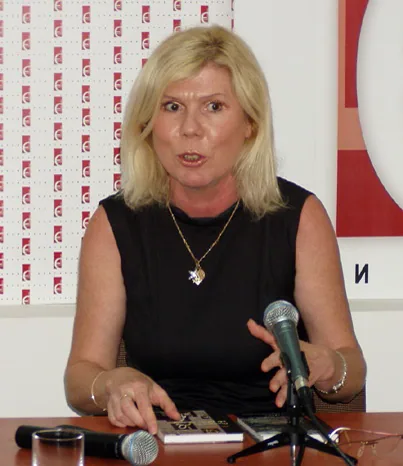
– Your words resonate with Wagner's words: "A talented composer can write an opera, but a genius can stage it."
– It is a difficult situation. You can convey a work to people, but will they understand it, or accept it? Or will they quickly perceive it and even quicker forget it? After all, in any genre there is eternal art and there is fashion.
We are all vibrating clumps of energy. And the Universe is filled with certain vibrations that resonate with each other. If an artist has captured the «master» (eternal) vibrations (that is, put harmony and eternal questions into a work), then this work will remain forever. And if they only captured temporary bursts and described them, the achievement will fade into oblivion. Humanity has not changed one bit and will not change; I wrote about this in one of my books. In the Lviv Opera House hangs a large painting by the artist Henryk Siemiradzki «On Mount Parnassus». In the centre, Athena holds the scales (like Themis), next to her are all the Muses and Apollo, and below people are jumping, grabbing the train of Fortune and Fame, who are soaring into the air, — and falling into the abyss. On the side sits Clio (the muse of history), before her is an open book with the Latin inscription: 'So it was, so it is. Will it be so?'. And I give the answer in my book: 'It will always be so.' Because all people are the same, they will never change, they come to Earth with the same set of good and evil. When good triumphs in the heart, people go further upward, and when evil prevails – they descend, and in their place come again people with the same set. If the author captures the eternal truths that reflect the struggle of good against evil, the core of human passions, problems, and joys, he will remain through the ages.
– I suppose it's burdensome to engage in self-promotion?
– I enjoy it. You need to resonate with people’s vibrations, and to do that you should simply reach out to them. Then a chain reaction begins: the more heartstrings I touch, the more people become interested. But if the book is bad, everything will die away; the vibrations will stop. However much the author jumps about or shouts, that publicity will leave nothing but a bubble. There is no point in writing showy but second-rate books. If my writing does people no good, I will stop. That is all. On the other hand, I play a game: I treat everything as a game, take nothing too seriously, and enjoy playing, because once we begin to take everything too seriously, we may as well give up on ourselves.
– Life dramas and tragedies begin...
– Of course. Why? Well, only twenty people came to the book presentation. And that's good. Maybe it will generate a better resonance from them than if sixty-five had come.
– What is key for you in creativity?
– Firstly, nature agrees with us in everything, secondly, the world is fair, thirdly, the entire physical world around us is a reflection of ourselves.
– And in terms of genre, how do you define yourself?
– I would say that I write philosophical or philosophical-mystical novels. I use mysticism sparingly: it suggests where we must move next in order to see the way ahead. Mysticism is what we cannot see; once we see and understand it, it ceases to be mystical for us. I write about this too: “the time will come, and you will see it...”
Perhaps it was rather impudent of me, but I allowed myself to contradict Socrates — or, more precisely, to change his statement “I know that I know nothing” into “I know that I know everything; I only need to remember it.” That seems better, because if I tell a student, “I know that I know nothing,” they will respond, “Then I need nothing at all.” That is a pessimistic view. In essence, the two ideas are identical, because everything and nothing are one and the same; the circle closes. I know that my soul knows everything. The world opens up when we begin to know ourselves. The Temple of Apollo at Delphi bore the inscriptions “Nothing in excess” and “Know yourself.” When you begin to know yourself, it is as though knowledge arises from within: it does not come from elsewhere; you remember it. After reading my book, an acquaintance responded, “But I knew all of this; I had simply forgotten...” Indeed, no one writes anything new. We have known everything for a very long time; we merely remind one another of what we have forgotten.
– Tell us about your "technologies".
– Buddha said: "We are what we think." When I write another book, there is a constant collaboration between me and the Universe. I walk down the road, look at a person, and try to define this person with one word, to guess what they are thinking: by their eyes, appearance, gestures... When people talk about illnesses, you can immediately understand what kind of person they are, or if you know about their illnesses, you can also quite accurately determine what the person is thinking. 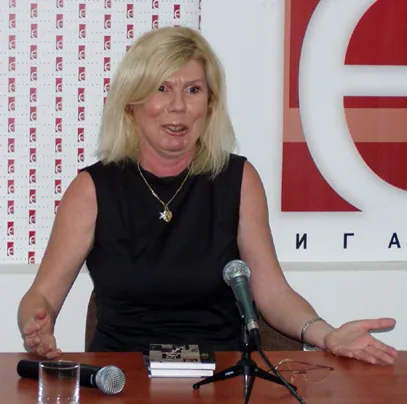
For a time, for example, I lived the life of Vasylina, the protagonist of “From the Varangians to the Greeks, or a Story Traced in Runes”. As I write a book, I enter a different set of circumstances, and that is the most interesting part: curious coincidences begin to occur. I hear phrases drifting towards me — clues to what I should write next. When I did not know how my characters’ fates should unfold, I cast the runes, and they told me. I love mysteries of various kinds, though rituals do not interest me; I seek the underlying truths. I am very fond of alchemy. Incidentally, the three primary alchemical colours correspond to the RGB colour model that we use in computer graphics — formulas discovered long ago, forgotten, and now recalled.
I am beginning to understand the triangle and the trinity. How do we attain what is already known? Every result is a child born of masculine and feminine principles; if my result is poor, those two principles within me are out of balance, and the triangle is not the one I would like. Everything must be analysed carefully in order to correct the situation. For example, I quarrelled with my supervisor in Greece. As I walked through Lviv, I passed the Greek taverna where I regularly drink coffee. A sign on the door read “Renovation”. I understood: Greece had quarrelled with me... I read signs at every step and later transfer those events into a book.
– Be specific.
– A voice told me that I had to finish my book by a specific date, otherwise it would not have magical power. After that, unpleasant incidents started happening to me. I wrote a fragment – the power went out in the entire street, the computer broke down. And I know it happened because of me. Because I started writing specifically about magic, and that is forbidden. Work on the book stalled – due to a sea of presentations and some incredible invitations. Eventually, three friends from France also showed up out of the blue – in short, everything was arranged so that I wouldn't write. But I knew I had to finish it. Some force stirred me, and by a miracle, I brought the matter to an end. Now readers say that the book 'Purification, or I Do What I Want' has magical power. And all because it was written before December 21, when the day overcomes the night and the Sun begins to grow. On September 21, its “killing” occurs, the Sun wanes, the day shortens, nature fades, and on December 21 the old cycle ends, and the next day (this is described on the last pages of the book) new bright forces are born.
Other kinds of coincidences occur. I was writing a book and felt that something was missing. It seemed interesting overall and contained plenty of adventures — I love adventures of every kind — but it lacked something essential, a spark. I exclaimed, “Give me a clue,” opened a book of ancient Greek myths, came upon the story of Apollo and Pan, and understood that I had to use the contest between the divine and wild nature. I did not yet know how, but I knew with certainty that I would use it. I began searching the literature on Apollo and Pan, even though I was writing a novel about abandoned women.
– So, does each of your novels have a historical-philosophical underpinning?
– In order for a work to be interesting and have a good ideological foundation, I use some philosophical system. In the first novel “Purification, or I Do What I Want” I described the life of scientists and used the main Hermetic laws, in the second “From the Varangians to the Greeks, or a Story Traced in Runes” – the philosophy of Scandinavian runes. The novel is about Ukrainian women migrants working in Greece.
– Could you explain the runes?
– Runes are small stones carved with letter-symbols from the ancient Scandinavian alphabet, which carries magical meaning. Each letter accordingly embodies a philosophical concept. Every chapter of the book is marked with a particular rune, effectively providing a concise outline of the book. People who can read runes will immediately understand what the book is about and the philosophical idea it contains. I wrote the second book, “Here and There, or the Path Between Parnassus and Olympus”, about wealthy people who must find their happiness. It has a philosophy woven through it: we all live Here — in Heaven, or Paradise — and from time to time must go There, to Earth, and do something. We know about this “journey” before birth and after death; during life, we must discover our true calling. We therefore all exist like wrapped-up chrysalises, and to become a butterfly one must make an unusual movement — break through the pupal shell.
The fourth book is based on a version of Plato’s “Atlantis”. Every state grew upon an Atlantis of its own that later sank. The sea then receded and a new state appeared. So I imagined an unnamed state living in darkness that must bring back the sun. I use Egyptian and Hellenic mysteries; in particular, the god Serapis appears, a fusion of Osiris and Apis. He is an analogue of Zeus and the Sun God. And the people wait for the sun finally to shine.
All my books end happily. I try to make readers feel happy after reading them: "Oh, now I know what to do."
– Do all your books really have happy endings?
– Of course. I never have an unhappy ending.
– You seem a very optimistic person. Do you never feel sadness or depression?
– Sometimes unexpected events can be overwhelming. Once a friend called and asked, “Why does your voice sound like that?” I answered, “Things are difficult at work.” — “What? Am I really hearing this from you? You changed the way all of us see the world, and now you are depressed. Go and reread your books at once!”
I recover quite quickly, even when serious troubles happen, usually within a day or two I find something to hold onto and climb out.
– What guides you spiritually?
– It may sound pompous, but we have to live, act, and create for the sake of humanity, and not with the expectation that we give something to someone and that it will be returned to us, that they will repay us. “Love your neighbour as yourself.” Do good not only for your sister, brother, parents, and children, but also for people unknown to you, alcoholics, drug addicts – everyone, so that they live better. My life is filled with various strange incidents that seep into my books.
– Could you give us an example?
– One evening, as I was returning home, a robber attacked me. He grabbed my handbag; I fought back with all my strength, but he swore and threatened to cut my throat. He took the bag and disappeared. There was not a penny in it — I had left my wallet at home — but it held my mobile phone, my lectures on continuum mechanics, and assorted personal items. At home, my elder son immediately said, “We must act — let’s find the criminal.” Together with him and a group of his burly friends, I set off into the darkness. After a while, I suddenly realised that the boys were gone and I was alone in a dark street. Then I saw the robber selling my phone to a woman. I rushed over and shouted, “You have just stolen my bag and that mobile phone. At least return my lectures — what will I do tomorrow?” “Come with me,” he said. “I will not go with you; what if you really do cut my throat?” It was already the dead of night. “No, I’ll give them back,” he said. We went. He left me at the gate, entered a building, and brought out the bag with my lectures, watch, and everyday cosmetics. Then I came to my senses: “Give me the phone too; it contains a great deal of information.” — “I won’t. Or give me at least twenty hryvnias.” I did not have a penny, so I proposed: “Come to my home with me, wait outside, and I will bring you twenty hryvnias.” — “I won’t go. I’m not that foolish — you’ll call the police at once.” I tried to persuade him: “I am a believer. I give you my word of honour that I will not call the police.” He agreed. On the way, I asked his name and who he was. I protested: “Aren’t you ashamed? You frightened me terribly.” — “Oh, you are very brave,” he said, switching to the respectful form of address. I even asked, “Would you vote for me?” (I turn everything into a game.) At the time, a political party had invited me to stand for election, though I later declined because I dislike politics. The young man replied, “I would certainly vote for a woman like you.” When I stumbled, he steadied me. We reached the school near my home, and suddenly all my boys appeared. The petty thief said, “They’re going to beat me.” I objected: “They won’t. I promised you twenty hryvnias; I will give it to you and you can leave.” I told my son, “Bohdan, go home, get the money, and bring it here. I promised him.”
– By the way, how old was the attacker?
– About twenty-five, and huge. While my son went to fetch the money, the robber told the boys: “This woman should become the city’s mayor” — he did not understand which office I was being invited to seek and, for some reason, assumed it was mayor — “and when she does, there will be neither alcoholism nor banditry.” That was his speech. I handed him twenty hryvnias and said, “Give it to your child” (on the way he had said that he supposedly had one). As the saying goes, I turned the other cheek. Later people told me, “How foolish you were! You should have called the police and had him locked up...” But I could not; I had given my word. I later used the episode in one of my novels.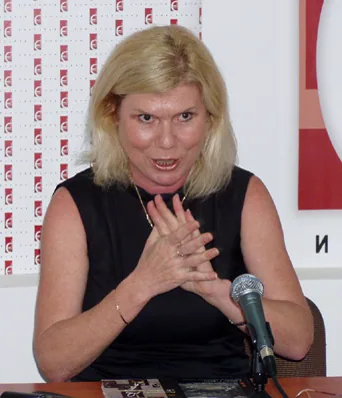
– What are you reading? Which writers would you recommend to our readers?
– Besides reading philosophical and historical primary sources, I try to improve my command of language through the work of good Ukrainian writers, both well known and less familiar. Among the celebrated ones are Mariia Matios, Oksana Zabuzhko, and Yurii Andrukhovych — masters of language. I read after I finish writing so that I am not thrown off course, because everyone has their own ideas. I greatly admire Vira Vovk, a recipient of the Shevchenko Prize. She is a close friend despite our considerable age difference and the fact that she lives in Brazil. We speak regularly, as I do with her kindred spirit in Geneva, Zoia Lisovska-Nyzhankivska, daughter of the pioneering Ukrainian woman composer Stefaniia Turkevych-Lukiianovych, who is buried in Cambridge. Incidentally, BaK, the publishing house that issues my work, also published a book about her.
I enjoy reading Paulo Coelho. Lviv newspapers sometimes accuse me of being his follower and call me the Ukrainian Coelho, though that is not so. Our only kinship lies in the fact that both of us write simply and some ideas may overlap, but I do not imitate Coelho; I follow my own path. Some people say he is a poor writer, while I think he is a good one with millions of admirers. I have noticed his popularity in Britain, Greece, and other countries, for example.
Recently, I reread all of Plato because I had become interested in Atlantis and needed to learn about that state; I therefore studied the dialogues “Timaeus” and “Critias” attentively. I delved deeply into Greek mythology and examined everything relating to Apollo and Pan with particular care. I read Sappho and found interesting ideas. I wanted to reread Lesia Ukrainka’s “The Forest Song”; I am extraordinarily fond of several of her poems. I reread Hemingway’s “The Old Man and the Sea” because at school I could not understand why he had received the Nobel Prize. And I returned once more to Knut Hamsun.
My reading is therefore very wide-ranging.
– What message closest to your heart would you like to share with our readers?
– I would like the light to shine for everyone: for people to emerge from darkness, stop being afraid, and cease saying that it is too late to undertake important, difficult things or that they cannot change anything. Once we die, we will no longer be able to act — but as long as we live, we can do anything! Do not fear even the most extraordinary actions; do not be afraid to step into the abyss, because at the most critical moment a plank will appear to support your foot. Always do what your heart desires.
– We should not be afraid to step into the abyss?
– In an old “Indiana Jones” film, the hero, searching for the Grail, found an amulet inscribed with an instruction to step into the abyss, and realised that he had to obey it. Indiana Jones stepped forward, a plank slid out from the side, and he crossed. Had he been afraid, he would not have made it across or achieved his goal.